Missouri Tried to Equalize Charter School Funding: It Did Not Succeed
Massive infusions of funding will not magically make schools better.

Curious about what’s happening in school choice? Our blog brings you the latest research, helpful tools for families, policy updates, and more—all in one place.

Families are choosing a type of school for one child while choosing a different type of school for another child, in the same household.

Massive infusions of funding will not magically make schools better.

The wait is over. The U.S. Department of the Treasury has released regulations for the Federal Tax Credit for Scholarships (FTCS), giving states, scholarship-granting organizations (SGOs), donors, and families important new details about how the policy will work when it launches in 2027.

The U.S. Department of Treasury released long-awaited rules that will govern implementation of the Federal Scholarship Tax Credit (FSTC), signed into law by President Trump on July 4, 2025.

In our most recent Public Opinion Tracker polling, we asked Americans to think ahead to the next election and consider a hypothetical political candidate who supports ESAs. Then, we asked if they would be more or less likely to vote for that candidate, based on their pro-ESA position.

This week, EdChoice Legal Advocates (EdLA) filed an amicus brief with the U.S. Supreme Court, expressing support for religious families seeking to use faith-based curricula in California’s independent study program.

As a new school year begins and midterm elections approach, new EdChoice polling reveals what Americans and school parents think about the biggest issues facing K–12 education—and what they’re prioritizing in the year ahead.
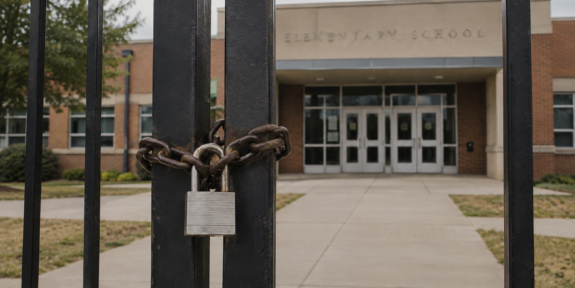
Does school choice cause public schools to close? New research examining nearly three decades of data finds little evidence that it does—even in rural communities. Instead, closures are more closely tied to broader enrollment and demographic trends.
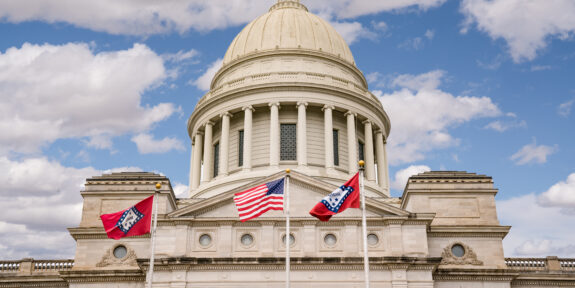
When reviewing the $93.8 million Arkansas ESA program for the 2024-25 school year, the state auditor identified $60,417 in anomalous payments. To save you a trip to your calculator app, that’s a finding of 0.06% of total spending that was problematic.

At its heart, educational freedom is personal—it's about families finding the learning environment where their children can thrive.
We recap remarks made by Leslie Hiner during a private breakfast at State Policy Network’s Annual Meeting about the Federal Tax Credit for Scholarships.
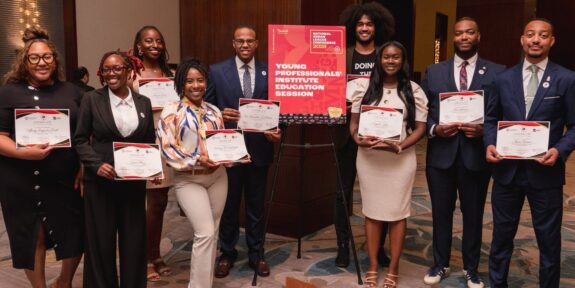
We take a look at the Young Professionals Institute: Education Fellowship that is developing the next generation of education advocates.

We take a look at the myth that declining student enrollment is linked to declines in per pupil expenditures.