Appeals Court Rules Against Ohio EdChoice Program, Parents Will Appeal to Ohio Supreme Court
Families will appeal today's ruling by the Ohio Court of Appeals that the state’s Educational Choice Scholarship program is unconstitutional.

Curious about what’s happening in school choice? Our blog brings you the latest research, helpful tools for families, policy updates, and more—all in one place.

Explore key provisions in Treasury’s proposed Federal Tax Credit for Scholarships rules, including donor credits, student eligibility and what to expect ahead of the 2027 launch.

Families will appeal today's ruling by the Ohio Court of Appeals that the state’s Educational Choice Scholarship program is unconstitutional.

New research co-authored by EdChoice researchers finds that students with disabilities participate in private school choice programs at higher rates than in public schools, challenging common assumptions about educational choice.

EdChoice’s Marty Lueken explains why ESA programs need strong oversight without sacrificing families’ access to educational opportunities.

Arkansas’s educational choice program got bigger, and the average test performance of the students got better.

Massive infusions of funding will not magically make schools better.

Families are choosing a type of school for one child while choosing a different type of school for another child, in the same household.

The wait is over. The U.S. Department of the Treasury has released regulations for the Federal Tax Credit for Scholarships (FTCS), giving states, scholarship-granting organizations (SGOs), donors, and families important new details about how the policy will work when it launches in 2027.

The U.S. Department of Treasury released long-awaited rules that will govern implementation of the Federal Scholarship Tax Credit (FSTC), signed into law by President Trump on July 4, 2025.

In our most recent Public Opinion Tracker polling, we asked Americans to think ahead to the next election and consider a hypothetical political candidate who supports ESAs. Then, we asked if they would be more or less likely to vote for that candidate, based on their pro-ESA position.

This week, EdChoice Legal Advocates (EdLA) filed an amicus brief with the U.S. Supreme Court, expressing support for religious families seeking to use faith-based curricula in California’s independent study program.

As a new school year begins and midterm elections approach, new EdChoice polling reveals what Americans and school parents think about the biggest issues facing K–12 education—and what they’re prioritizing in the year ahead.
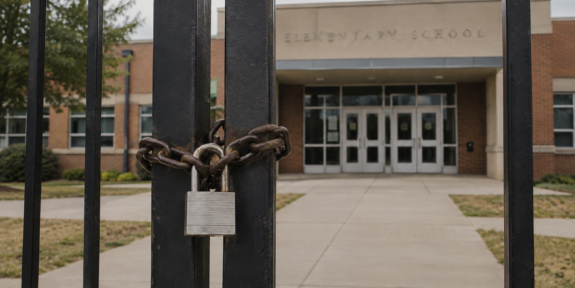
Does school choice cause public schools to close? New research examining nearly three decades of data finds little evidence that it does—even in rural communities. Instead, closures are more closely tied to broader enrollment and demographic trends.