Gifted, Talented, and Switching Schools
We’ve surveyed parents about advanced/gifted education off and on since 2023, using our Public Opinion Tracker. Here is what we learned.



A new survey explores teachers’ views on the Federal Tax Credit for Scholarships, education priorities ahead of the midterms, and more.

A three-judge panel has dismissed a lawsuit challenging the state’s Education Freedom Scholarship (EFS) program.

The EdChoice mission is to advance educational freedom and choice for all as a pathway to successful lives and a stronger society.

We’ve surveyed parents about advanced/gifted education off and on since 2023, using our Public Opinion Tracker. Here is what we learned.
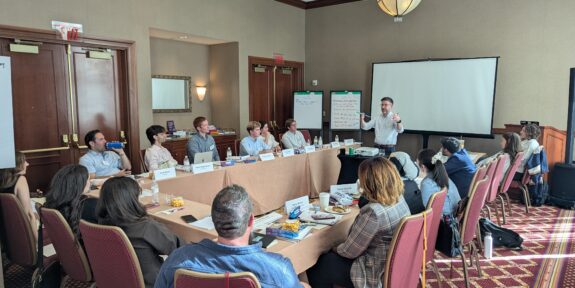
EdChoice Academy brings the challenges of passing state education legislation to life through an interactive simulation.

EdChoice secured a major victory for Tennessee families Monday when a three-judge panel dismissed a lawsuit challenging the state's ESA.

A new survey explores teachers' views on the Federal Tax Credit for Scholarships, education priorities ahead of the midterms, and more.

Families will appeal today's ruling by the Ohio Court of Appeals that the state’s Educational Choice Scholarship program is unconstitutional.

Explore key provisions in Treasury’s proposed Federal Tax Credit for Scholarships rules, including donor credits, student eligibility and what to expect ahead of the 2027 launch.
To safeguard choice programs for families, EdChoice created EdChoice Legal Advocates (EdLA) to engage in the school choice litigation effort directly. To realize Milton and Rose’s vision of universal choice, we must not merely create educational freedom programs, but also ensure they withstand legal challenges in state courts.

The Federal Tax Credits for Scholarships (FTCS) will provide scholarships to K–12 students. It is overseen by the United States Department of Treasury and is administered by individual scholarship granting organizations (SGOs).

The 2026 EdChoice Friedman Index is a comprehensive and easy-to-understand measure of the availability of private K–12 educational choice across the United States.

Our annual SIA survey, in partnership with Braun Research, provides an opportunity to assess how Americans’ perspectives on K–12 education have shifted over the last decade. Some of the new questions this year revolve around the role of the federal government in K–12 education, school funding, and more.

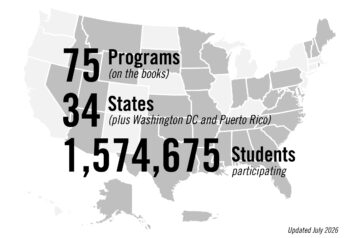
More states than ever offer families K–12 programs that help them access options like private school or a customized education that fits their needs. Check out our dashboard of every program across the states.

This user-friendly platform is designed to help you navigate the diverse landscape of Education Savings Accounts across different states. Whether you’re a parent, student, educator, or policy enthusiast, our tool offers a comprehensive comparison of ESA programs by state and by specific features.
What type of school choice program does your state have? Check out every school choice program here!
Want to know what a voucher is? Want to see some powerful stories of families choosing school choice? We have it all on our YouTube channel!
On this episode, we discuss the challenges to Arizona's Universal ESA program and the charges of unallowable expenses. There's a lot going on and the team unpacks it all.
Mike is joined by Alyssa Tormala, Head of School at Laurel Springs School. She shares the history, model, and unique features of their fully online K-12 program.
Dalena Wallace, co-founder of HERO (Heartland Education Reformation Organization), talks about how one family's homeschooling journey grew into a movement helping churches.