
How Many Choice Students Have Special Needs? Thousands More Than Last Year.
When the existing public school option doesn’t meet your child’s learning needs, school choice provides an opportunity to find a school that does. This can be especially essential for children with special needs, who aren’t served by a one-size-fits-all approach to education.
As my colleague John Kristof observed in last year’s version of this article, a law is only as good as its enforcement, and the Individuals with Disabilities Education Act (IDEA) is no exception.
The law aims to provide appropriate accommodation so that every child can receive an education, but the enforcement of IDEA is largely left up to parents. Parents are expected to advocate for their children with disabilities and seek redress if their efforts are ignored or inadequately fulfilled by their school.
And of course, not all parents are on equal footing while advocating for their kids’ needs. Disputes with large institutions like school districts take time and, often, money. Lower income families start at a disadvantage in the advocacy process. It’s safe to assume that some kids slip through the cracks altogether.
These obstacles provide reasons to seek other educational options, and that’s before we even consider recent efforts to cut funding for the U.S. Department of Education, including parts of IDEA.
Many students with disabilities look to private school choice programs for those other options. Based on our most recent counts, there are at least 208,499 students in school choice programs who have disabilities.

We can only state that “at least” 208,499 choice students have disabilities because that’s the minimum number. This table shows data from 19 school choice programs out of 75 total across the country. These programs do represent most of the largest choice programs as well as programs specifically designed for children with special needs. However, many choice programs don’t report or even collect data on how many participants have disabilities.
Still, assuming there are 208,499 total private school choice students with disabilities, that accounts for 14% of all 1.5 million students in private school choice programs in the 2025-26 school year. For comparison, that’s approximately the same percentage of public school students who have disabilities.
Not every choice program is equally welcoming to students with disabilities. Funding structure is a key distinguishing factor that determines which programs are best equipped to help students with special needs. Typically, education funding formulas set a base amount of money for each public school student and provide some additional funding for children with disabilities. While some school choice states ensure that extra funding follows students participating in a choice program, others do not — instead giving the same base amount of funding to every choice student, regardless of disability status. That can make it very difficult for a student with special needs to find a new school that meets their needs. Some positive examples of choice programs with gradated award amounts that take disabilities into account include Ohio’s Jon Peterson Special Needs Scholarship voucher program and Arizona’s Empowerment Scholarship Account ESA program.
There’s certainly room for improvement. More programs could provide funding that takes special needs into account. More programs could transparently report participation data so we can get a clearer picture of how many students with disabilities are currently benefiting from school choice.
Overall, though, school choice programs provide important educational options to many students with disabilities, helping to ensure that each student can truly access education.
Latest from the Blog
-
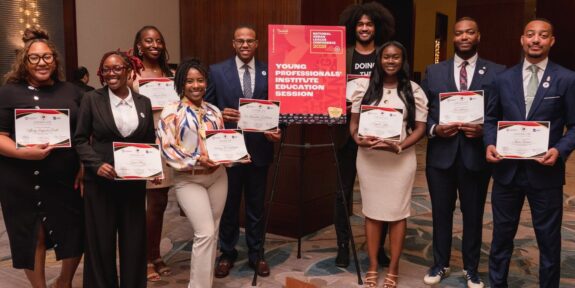
Developing the Next Generation of Education Advocates
We take a look at the Young Professionals Institute: Education Fellowship that is developing the next generation of education advocates.
-

Enrollment Down, Funding Up
We take a look at the myth that declining student enrollment is linked to declines in per pupil expenditures.
-

The Fiscal Case for School Choice and How to Craft Good Choice Law: EdChoice’s SPN Session
We recap our session at the 2026 State Policy Network's Annual Meeting in Orlando where we presented facts and arguments to combat both fiscal and legal attacks on school choice.