
New Study Finds Improved Academic Outcomes Among Ohio Voucher Students
This week, the Urban Institute released a new study by Matthew Chingos, David Figlio, and Krzysztof Karbownik showing positive impacts on students participating in Ohio’s EdChoice Scholarship Program, which provides vouchers that allow eligible students to attend participating private schools. (Please note that we at EdChoice are not affiliated with the EdChoice Scholarship Program.) The study found that voucher participation affected students’ college enrollment and degree attainment.
The Findings
The study follows 6,000 students who first participated in the EdChoice voucher program between 2008 and 2014, tracking 1,400 students up through expected college graduation. They are compared to students with similar backgrounds and academic achievement who remained in public school.
According to the study, EdChoice students were significantly more likely to enroll in college compared to students who remained in public schools. Almost two-thirds of EdChoice participants (64%) enrolled in college, while less than half of their public school peers (48%) went on to attend college. EdChoice students were also more likely to enroll in 4-year and selective colleges.
More EdChoice students graduated college with a bachelor’s degree relative to their peers. Twenty-three percent of EdChoice students completed a bachelor’s degree, compared to 15% of similar students who stayed in public schools. Overall, an EdChoice student was 32% more likely to enroll in college and 60% more likely to complete a bachelor’s degree.
These positive impacts were the largest among students who participated in the EdChoice program for at least four years—which translates to about 60%of EdChoice students overall. Delving into the demographics, the scholarship program was most beneficial for male students, Black students, students who had lower test scores before leaving public school, and students from low-income households.
Notably, the EdChoice voucher program did not appear to negatively affect students in public schools. On the contrary, students who were eligible for the EdChoice scholarship but remained in public school actually showed modest increases in college enrollment and graduation as well. This echoes previous findings that indicate a “voucher threat” phenomenon in other choice programs (e.g., here), in which the competition created by school vouchers contributes to improvements in public school performance.
Why It’s Important
This new study on the impact of vouchers is especially important because it breaks the mold of relying on standardized test scores as a proxy for student outcomes. Past studies of Ohio vouchers have interpreted negative impacts on participants’ test scores as poor academic outcomes. As the researchers of the new study state, “private school participants in the EdChoice program have positive college outcomes, in contrast to the large negative short-run test score outcomes previously found.”
These new results suggest that state test scores might not tell the whole story. The authors suggest that state tests “might not be an ideal metric for evaluating private school quality,” given that private schools often teach different curricula than public schools. In fact, previous research has documented the disconnect between test scores and long term outcomes in choice programs. By observing college enrollment and graduation, we can look at long-term academic outcomes—which aren’t accounted for in the limited scope of standardized testing.
This study is also unique because it tracks the impact of vouchers all the way to college graduation. It’s the first study to report effects from a private educational choice program on public school students’ college outcomes. It’s also the “second study … to estimate the long-term effects of a statewide private school choice program that has previously been shown to reduce participants’ test scores, and the first study to be able to follow students as far as on-time college graduation.”
For context, the EdChoice scholarship program expanded dramatically in recent years. The program now offers vouchers to every K-12 student in Ohio. When considering the implications of this study, it’s important to remember that it looks at EdChoice students who first participated in the program from 2008-2014, when the program was only open to students from low-income families who attended low-performing schools. It’s too early to tell whether these benefits will persist in the era of universal eligibility, but these initial findings seem promising. It’s all the more important to study and understand the impacts of school choice programs now that more students than ever before are participating in choice programs across the United States.
To read the full study, including methodology, find it here.
Latest from the Blog
-
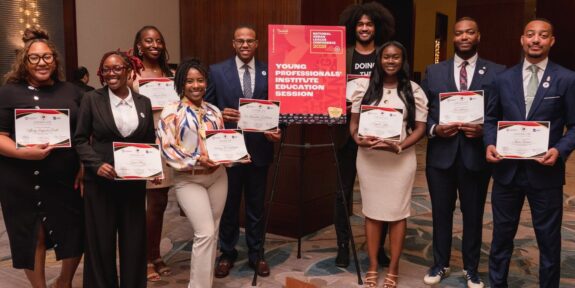
Developing the Next Generation of Education Advocates
We take a look at the Young Professionals Institute: Education Fellowship that is developing the next generation of education advocates.
-

Enrollment Down, Funding Up
We take a look at the myth that declining student enrollment is linked to declines in per pupil expenditures.
-

The Fiscal Case for School Choice and How to Craft Good Choice Law: EdChoice’s SPN Session
We recap our session at the 2026 State Policy Network's Annual Meeting in Orlando where we presented facts and arguments to combat both fiscal and legal attacks on school choice.