
The Growing Supply Side of School Choice
New EdChoice research shows how ESAs are expanding access and redefining education options
As universal school choice programs gain traction across the country, a new report from EdChoice Fellow Dr. Susan Pendergrass offers a timely look at a key question: Is the education marketplace keeping up with growing parent demand?
The Supply Side of ESAs: How Universal School Choice Programs Have Affected the Number of Private Schools and Home Education Vendors explores how education savings account (ESA) programs and other choice programs are reshaping the K–12 landscape—not just in terms of who can choose, but what families can choose from.
For decades, the number of private schools in the United States has remained flat or even declined slightly. But Pendergrass finds a different trend in states where families are broadly empowered to use public funds for private school tuition. In those states, the number of private schools is increasing.
And private school growth is just part of the story.
In Arizona—home to the country’s first ESA program with universal eligibility—families are not just choosing between schools. They’re assembling full education plans using a wide variety of providers. In a recent school year, parents used their ESA funds across more than 100 types of educational providers beyond traditional K–12 institutions.
Pendergrass notes that the number of vendors in Arizona’s ESA program grew from year one of universal eligibility (2022–23) to year two (2023–24). Particularly notable was the rapid rise in extracurricular physical education providers such as martial arts studios and dance schools—providers that may not resemble traditional classrooms but play a role in a child’s educational experience.
This growth in supply is a critical sign that education entrepreneurs are stepping up to meet the demands of families who now have greater flexibility in how they educate their children.
The report also addresses an important tension: while many parents are exercising some form of choice within the public system, far more say they would prefer to choose private or home-based education—if they could afford it. According to data from the EdChoice-Morning Consult monthly public opinion tracker, only 35% of parents say they would choose their local public school if given the freedom to choose. However, according to the 2025 EdChoice Share analysis, approximately 75% of students attend a traditional public school.
This gap between what parents want and what they actually choose is often driven by cost and access. That’s where ESAs prove transformative—removing the financial barrier that has historically limited access to private and alternative education.
The traditional model of K–12 education—where nearly every child attends an assigned public school—is shifting. Today, nearly one in five students in the U.S. is educated outside of the public system. If current trends continue, Pendergrass notes that number will likely grow, and the boundaries between school types will continue to blur.
The move from assigned schools to real choice is just beginning, but it’s already reshaping the education landscape. As more states roll out universal programs, families aren’t just getting more schools to choose from—they’re seeing new kinds of educational opportunities emerge, expanding what learning can look like. More private schools. More vendors. More innovation.
Read the full report here.
Latest from the Blog
-
This Is What Passing an Education Bill Feels Like
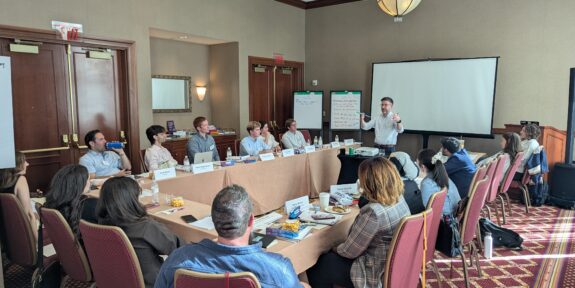
EdChoice Academy brings the challenges of passing state education legislation to life through an interactive simulation.
-

EdChoice Legal Advocates Wins Major Victory Defending Tennessee School Choice Program
EdChoice secured a major victory for Tennessee families Monday when a three-judge panel dismissed a lawsuit challenging the state's ESA.
-

Teachers Support Federal Tax Credit, Prioritizing Education Issues As Midterms Approach
A new survey explores teachers' views on the Federal Tax Credit for Scholarships, education priorities ahead of the midterms, and more.