
Surveying Teachers on Artificial Intelligence
Just in time for teacher appreciation week, we’ve released our Spring teacher survey. We cover a lot of ground in this one, from how teachers are feeling about the teaching profession to (of course) their opinions on school choice.
But today I want to highlight the questions we asked teachers about artificial intelligence.
Last month, a new poll from the Walton Family Foundation and Gallup came out with a deep look into how Gen Z (ages 14 to 29) attitudes on AI are shifting over time. The headlines are eye-catching. Young people remain skeptical about AI’s helpfulness and report feeling more negative sentiments about AI, compared to last year. They express concern that AI might undermine their learning and skill development.

Source: Gallup, https://news.gallup.com/poll/708224/gen-adoption-steady-skepticism-climbs.aspx
Since a good portion of Gen Z is still in school, this polling offers valuable insight into the student perspective on AI. Gallup helpfully separates K-12 Gen Z and adult Gen Z in the crosstabs—I highly recommend checking it out.
How does the student point of view line up with what teachers think?
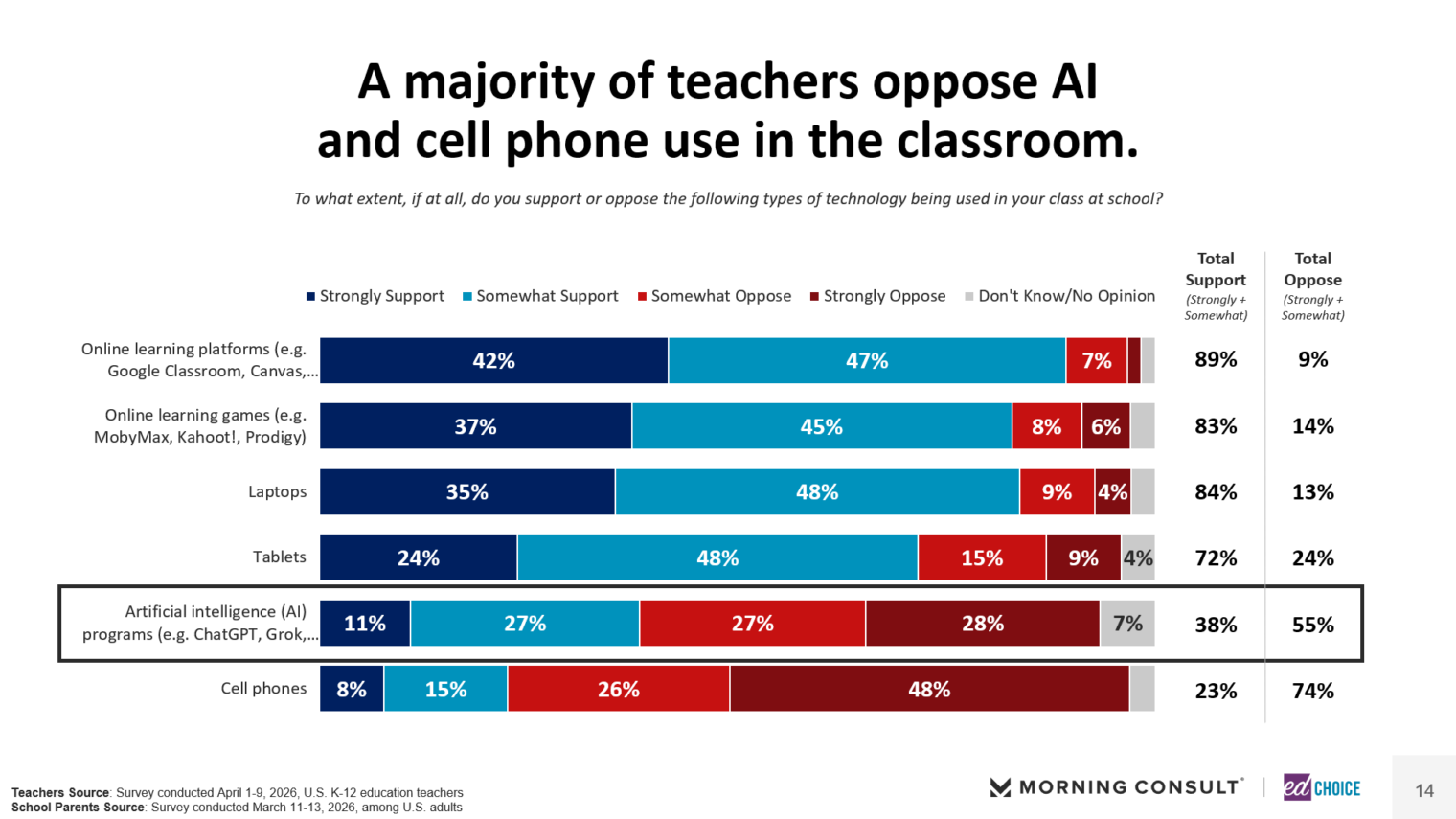
Similarly to how the Gallup poll observed cooling enthusiasm for AI among Gen Z, we’re seeing decreasing teacher support for AI in the classroom in our own polling.
This spring, a majority of teachers (55%) oppose using AI in the classroom, compared to 38% who support using it. That’s an 8-point drop in support since just last fall, when almost half of teachers expressed support for using AI in class.
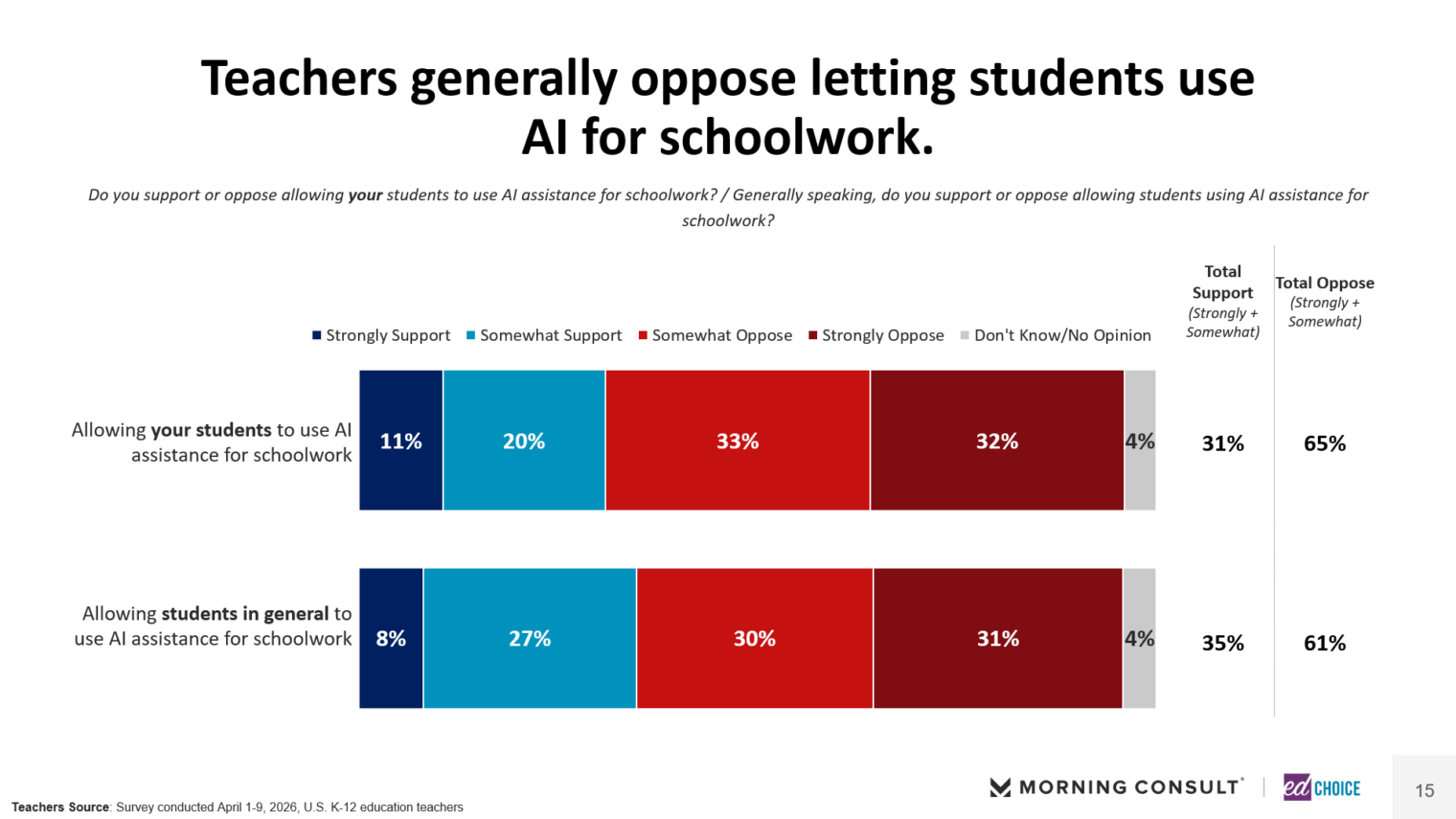
Teachers also express reservations about letting students use AI assistance for schoolwork. Two-thirds of teachers (65%) oppose allowing their students to use AI help. Following the same pattern, this is another area where we see decreasing teacher interest in AI. A majority of teachers (57%) already opposed their students using AI for schoolwork back in the fall, but that opposition has grown since the beginning of the school year—again, by about 8 points.
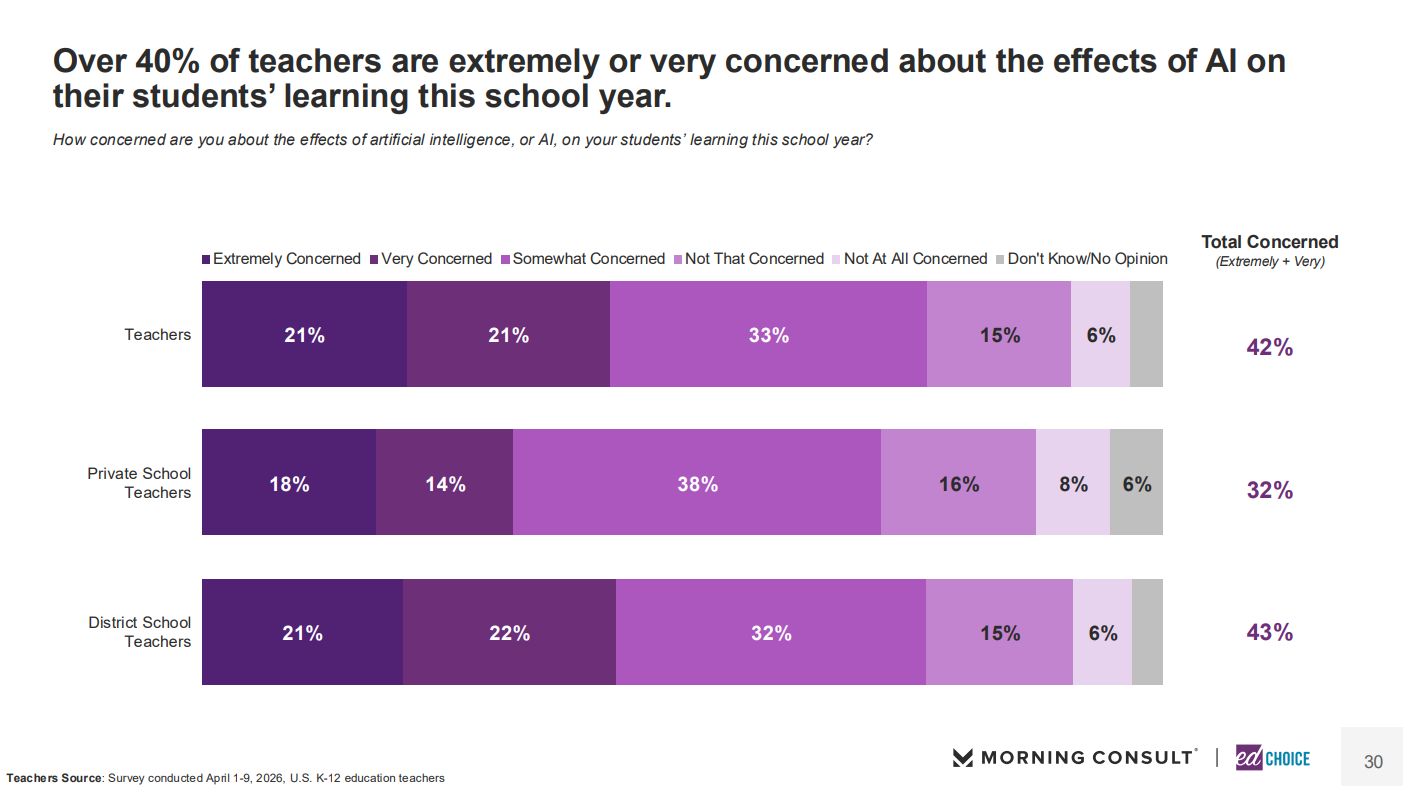
Why have teachers’ feelings on AI changed over the course of the school year? One possible reason is that teachers, like students, are concerned about how AI is currently affecting student learning.
A plurality of teachers (42%) say they’re extremely or very concerned about the impact of AI on their students’ learning this year. Notably, the next largest group of teachers feel somewhat concerned (33%), leaving only 21% who aren’t concerned. This draws another parallel between teachers and Gen Z students in the Gallup poll, with both groups specifically expressing worries about how AI affects learning and development.
So far, we’ve focused on the pressing issue of AI in the classroom. But let’s zoom out. How do teachers feel about AI in general, when school isn’t part of the question?
In short, not great.
Half of teachers (51%) are extremely or very concerned about the effects of AI on society in the future, which is five points higher than in the fall. Once again, the second largest group of teachers feels somewhat concerned (34%), with only 11% unconcerned. Interestingly, teachers consistently express more concern about AI than the general public or school parents—by about 10-15 percentage points.
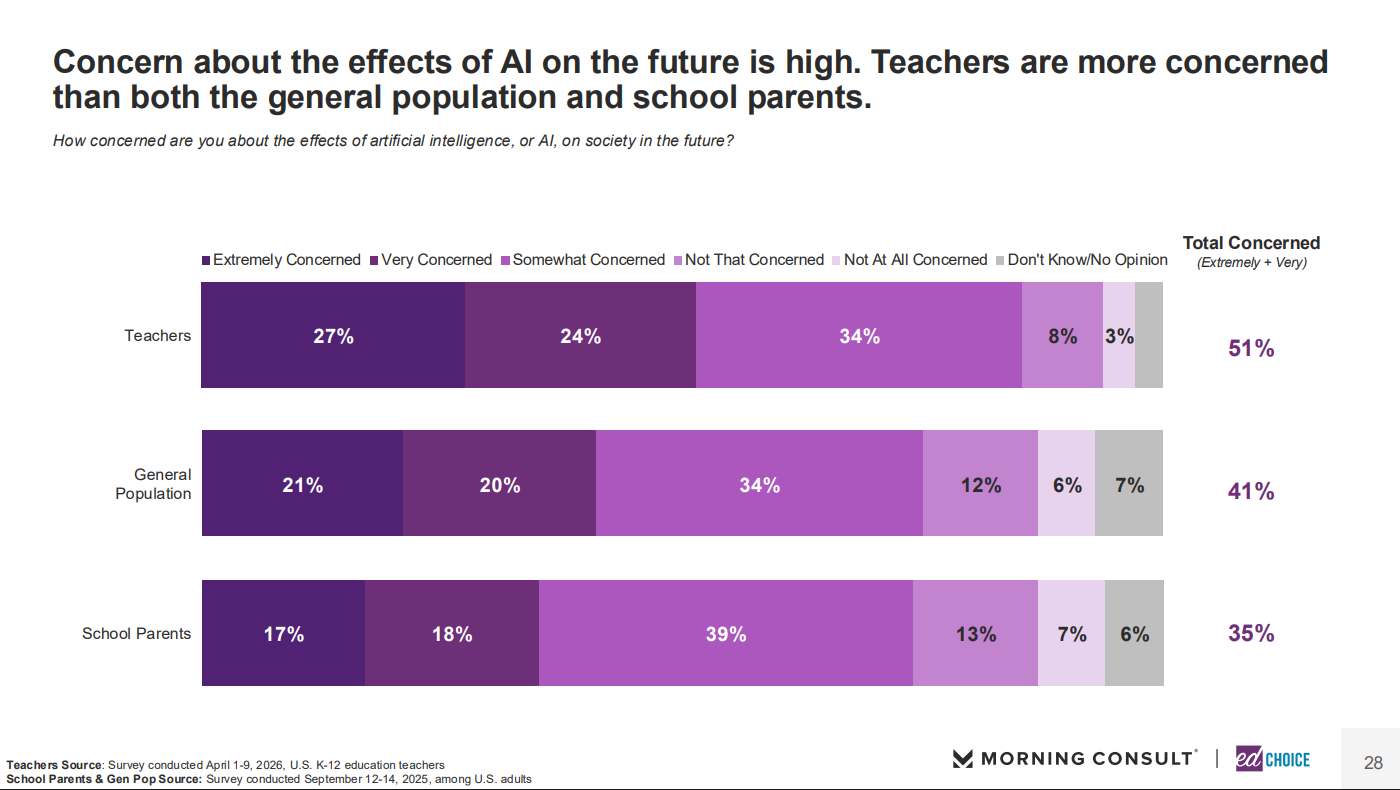
If we interpret this question as a way to gauge general teacher sentiment, it seems like teachers and their Gen Z students have similar levels of anxiety about AI. The parallels across the two groups are striking. Both sides of the classroom worry about the ramifications of artificial intelligence for the next generation.
With all of this in mind, it’s also important to note that students and teachers seem to share another common opinion: students may very well need to use AI in their future or at least understand how to do so.
The vast majority of teachers (72%) agree that it’s important to help students build the necessary critical thinking skills to appropriately use AI. If this new technology is truly going to become a part of the workplace and everyday life, students will need the right skills to navigate it—and still be able to think for themselves.
This was originally published to our Substack.
Latest from the Blog
-

The Birthday Gift Milton Friedman Would Want
Every July 31, those of us who care about educational freedom have an opportunity to remember Milton Friedman.
-

Summer Research Roundup: Three New Papers Worth Checking Out
Education research isn’t exactly beach reading, but this summer has seen several interesting papers published that provide both direct and indirect looks into issues relevant to school choice.
-

Declining Enrollment Doesn’t Have to Mean Declining Schools
Declining enrollment presents real challenges. It also gives district leaders a chance to build stronger schools for the students they serve.