
Highlights from the Newly Released 2026 Schooling in America Survey
What parents and the public really think about K-12 education, school funding, and educational choice policies
How are parents and the public feeling about K-12 education?
Each year, EdChoice’s Schooling in America (SIA) survey offers an in-depth look into that question. This week, we released the 2026 edition, our 14th annual, nationally representative look at parents’ and the public’s views on everything from school satisfaction, education funding, as well as school choice policies. Over the survey’s 14-year history, we’ve asked a set of recurring questions focusing on the direction of K-12 education, parents’ schooling preferences, parents’ satisfaction with their child’s education experiences, and feelings towards educational choice policies. Additionally, we include a handful of new questions each year to gauge public opinion on more timely issues within K-12 education. A few topics covered in this year’s survey include school switchers and feelings towards the new Federal Tax Credit for Scholarships.
The Schooling in America survey was fielded from March 24th to April 4th, 2026. We obtained nationally representative samples of both the general population (N=1,504) and current school parents (N=2,466).
A few housekeeping notes before we dive in.
First, our Schooling in America survey series is distinct from our monthly public opinion research through the EdChoice Public Opinion Tracker. SIA is an annual survey (first launched in 2013) that employs a mixed methods approach including non-probability-based online panels and probability-based live phone calls. We take the longer view with SIA, reporting historical trends and year-by-year changes for key questions surrounding K-12 education.
Our Public Opinion Tracker (in partnership with Morning Consult) launched in 2020 and differs from SIA in a few key areas. The Tracker is fielded monthly which allows us to ask questions that gauge public opinion on more timely and specific topics that are drawing buzz around K-12 education. That frequency allows us to examine more granular changes in opinion, as we did during the COVID-19 pandemic, and to see how experiences may shift in shorter time periods during a school year. Also, we survey a nationally representative sample of teachers twice a year in the Public Opinion Tracker, whereas SIA only reaches the general public and school parents.
Secondly, the findings below are just a glimpse into the full 2026 Schooling in America survey. Of course, for those interested, the full report can be found here. In the coming weeks we will release several additional blog posts dedicated to specific topics found within the survey, incorporating demographics data from the crosstabs. You can also find more content from SIA in our substack, Informed Choice.
With that, let’s walk through some of the key findings from the 2026 SIA survey.
Parents and the general public are more optimistic about K-12 education, but plenty of work remains
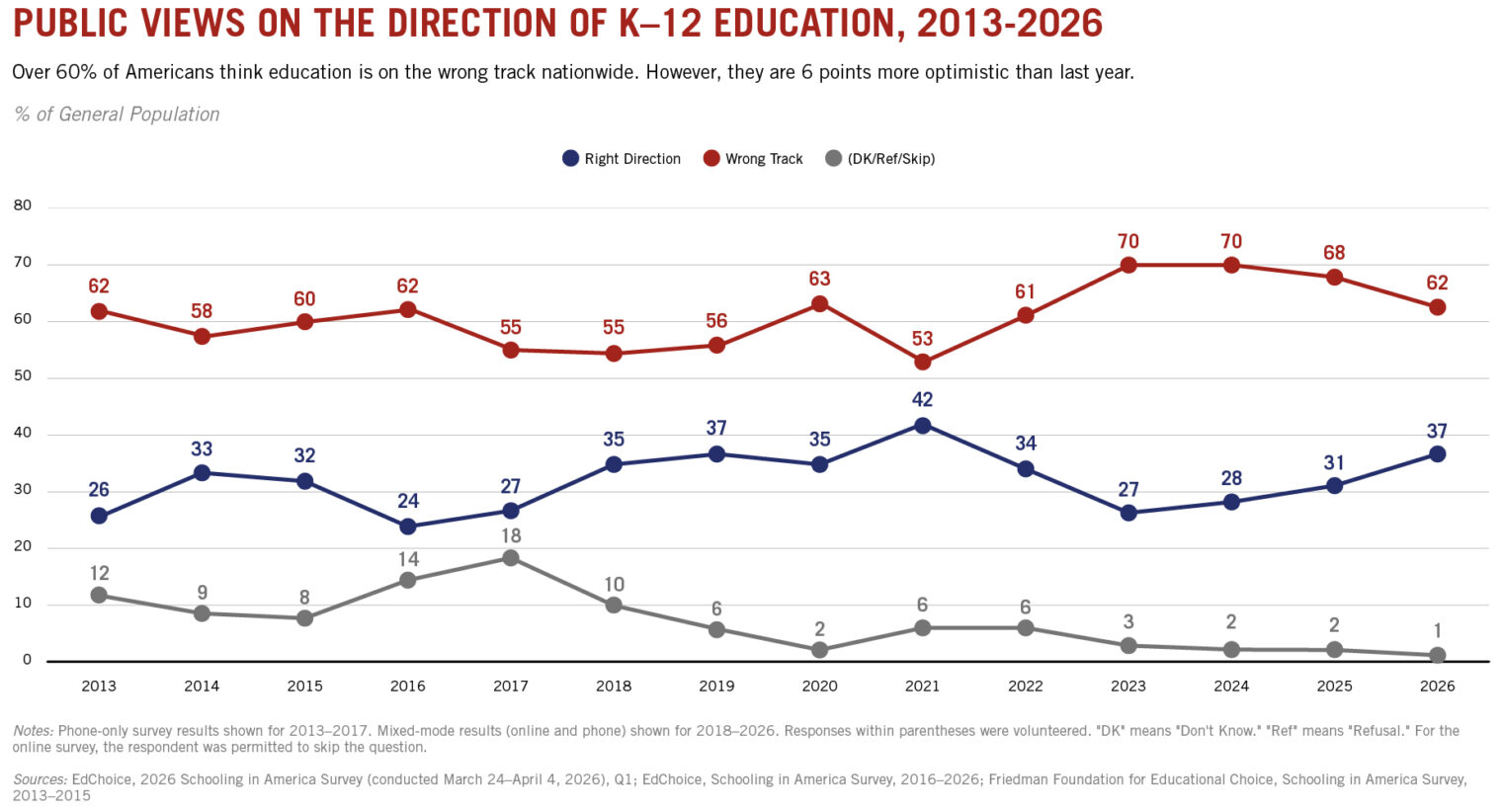
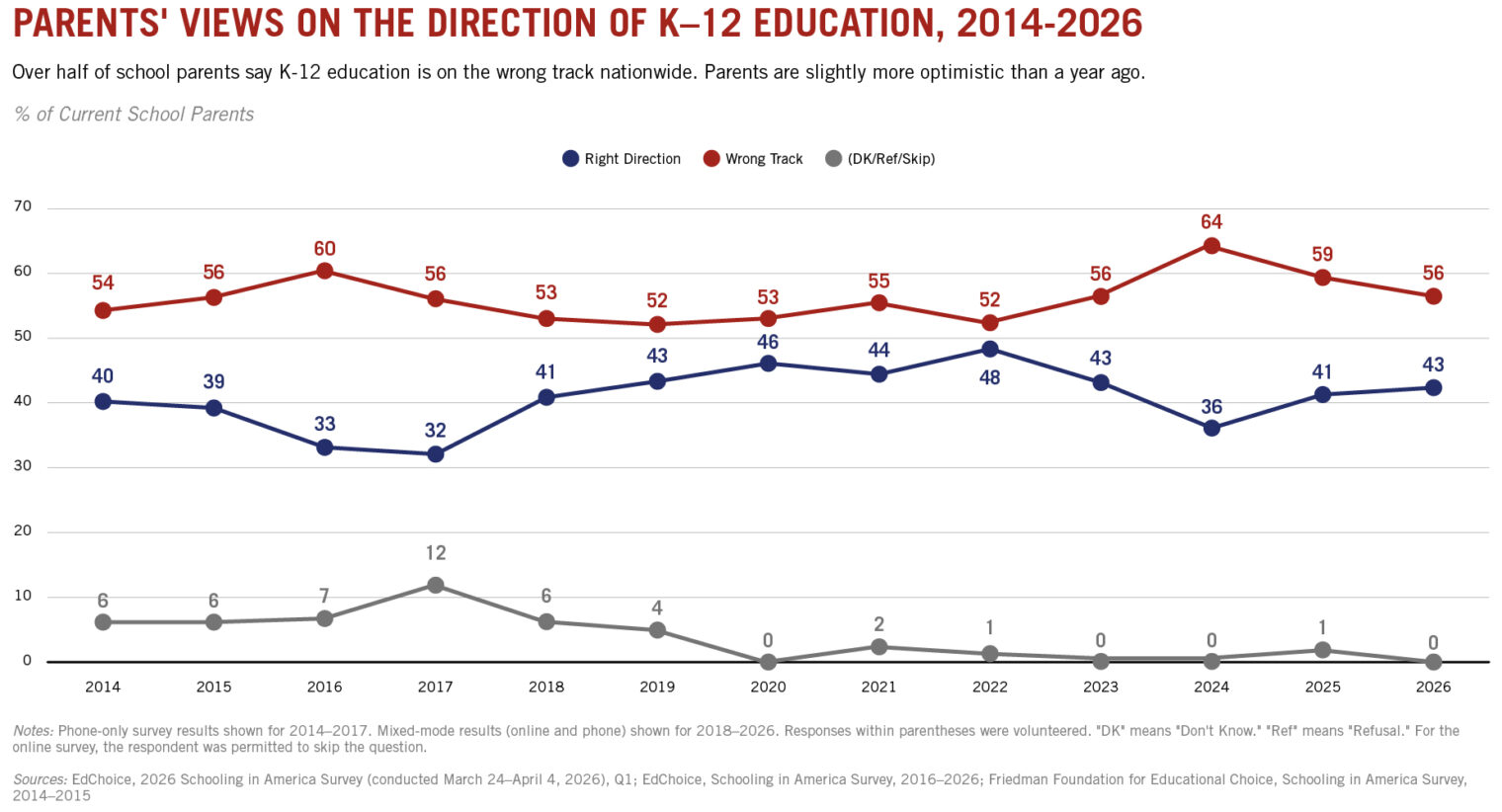
Each year, we ask respondents whether they think K-12 education is headed in the right direction or if it is on the wrong track. From 30,000 feet, results have been very consistent for both parents and the public. Both groups are more likely than not to say K-12 education is on the wrong track. Additionally, parents tend to be more optimistic than the general public in their willingness to say K-12 education is headed in the right direction.
There are some silver linings, however. Americans’ optimism increased 6-points from last year, up to 37%. In fact, optimism from the general public has jumped 10-points from 2023 and has been increasing for the third consecutive year.
We observed a similar increase in optimism among school parents. While the increase is relatively modest from last year (41% in 2025 to 43% in 2026), optimism from school parents has increased 7-points from 2024. Looking back to 2024, 64% of parents felt that K-12 education was on the wrong track, the highest level of pessimism we’ve observed to date. This year, pessimism among parents fell to 56%.
Americans and school parents are very supportive of the Federal Tax Credit for Scholarships
For the first time in SIA, we asked respondents about their feelings towards the Federal Tax Credit for Scholarships. As of writing, over 30 states have opted in to participate in the Federal Tax Credit for Scholarships. Signed into law in July 2025, and effective January 1, 2027, individual taxpayers can receive a dollar-for-dollar federal income tax credit for donations made to Scholarship Granting Organizations (SGOs) that meet federal requirements.
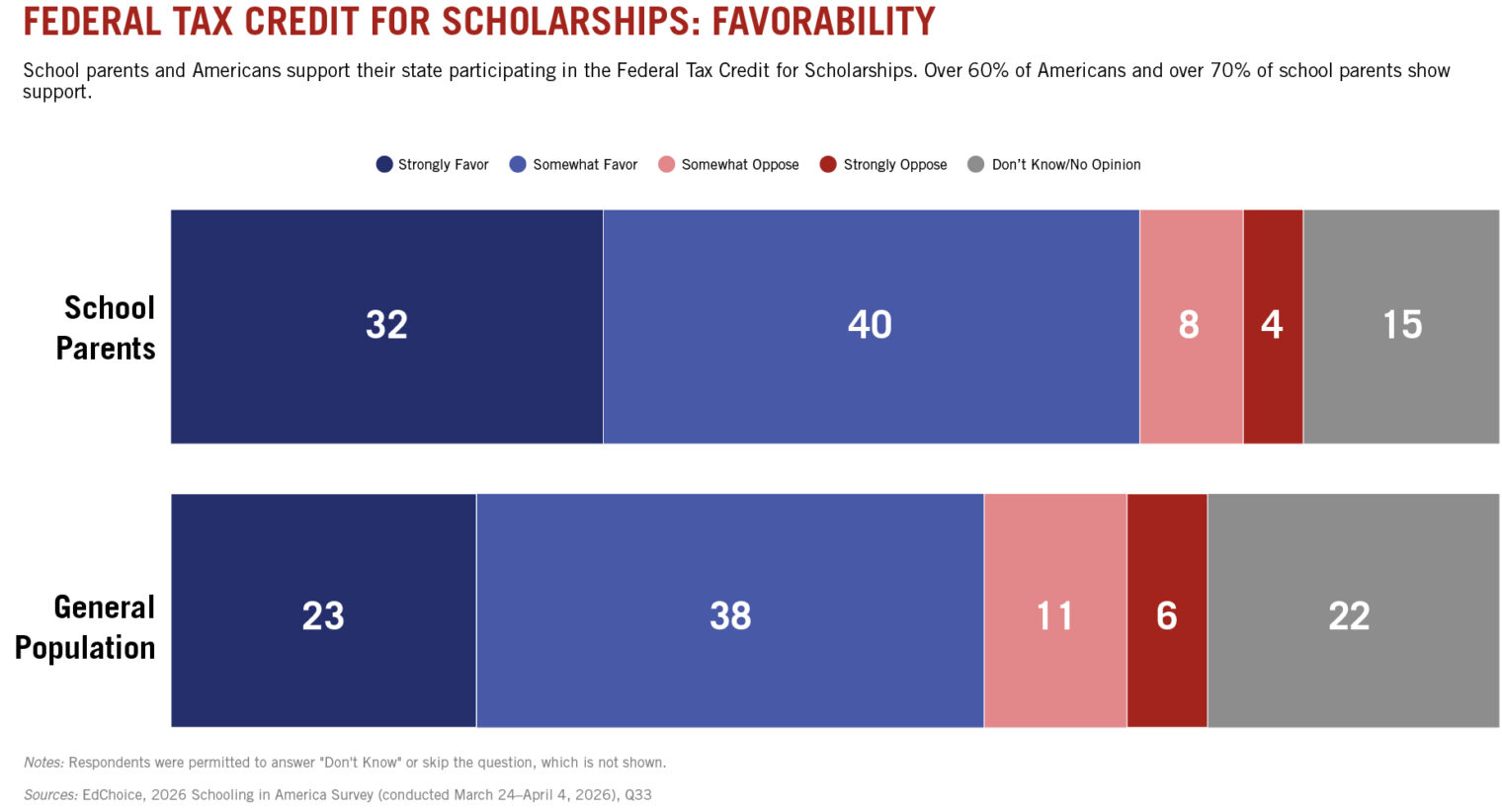
As it turns out, the Federal Tax Credit for Scholarships is popular among both the general population and school parents. Support is notably higher among school parents (72%) compared to the general public (61%). That said, less than one in five Americans (17%) and school parents (12%) oppose the policy. There remains a healthy chunk of the general public (22%) and school parents (15%) that responded “Don’t know” or “No opinion” when asked about their feelings on the Federal Tax Credit for Scholarships.
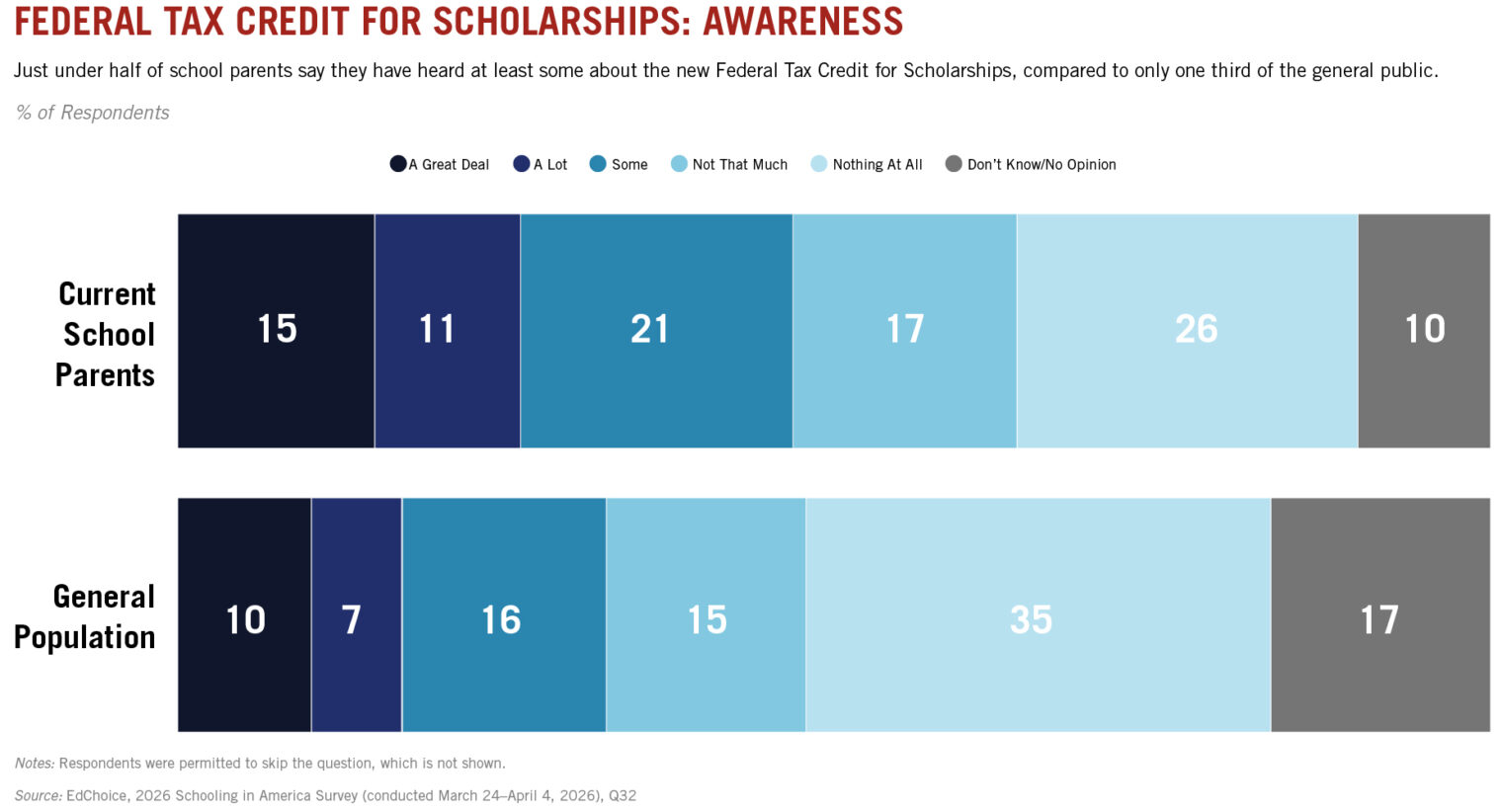
We included a question about each group’s awareness of the Federal Tax Credit for Scholarships. Only 17% of Americans, and 26% of school parents, reported hearing “A great deal” or “A lot” about the policy. On the other hand, 50% of Americans, along with 43% of school parents, said they have heard “Not that much” or “Nothing at all” about the new tax credit. In summary, while support for the Federal Tax Credit for Scholarships is strong, the same can not be said for awareness of the policy.
Support for school choice policies, especially ESAs, remains strong
Support for various school choice policies, including charter schools, school vouchers, and tax-credit scholarships remains quite strong among both the general public and school parents. Parents support for tax-credit scholarships (82%), school vouchers (79%), and charter schools (75%) is consistently higher than the general public’s school for these policies (72% for tax-credit scholarships, 69% for school vouchers, and 68% for charter schools).
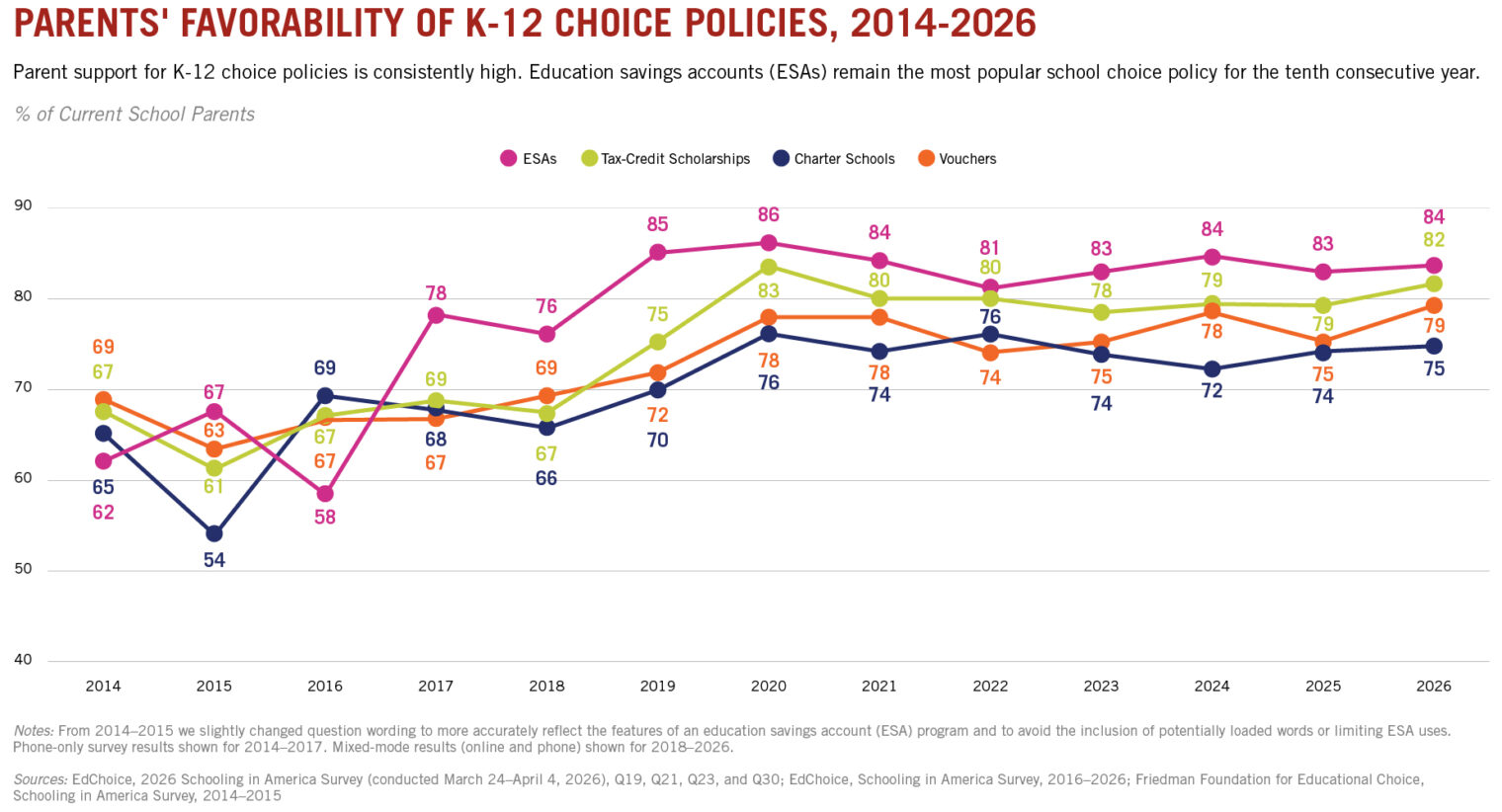
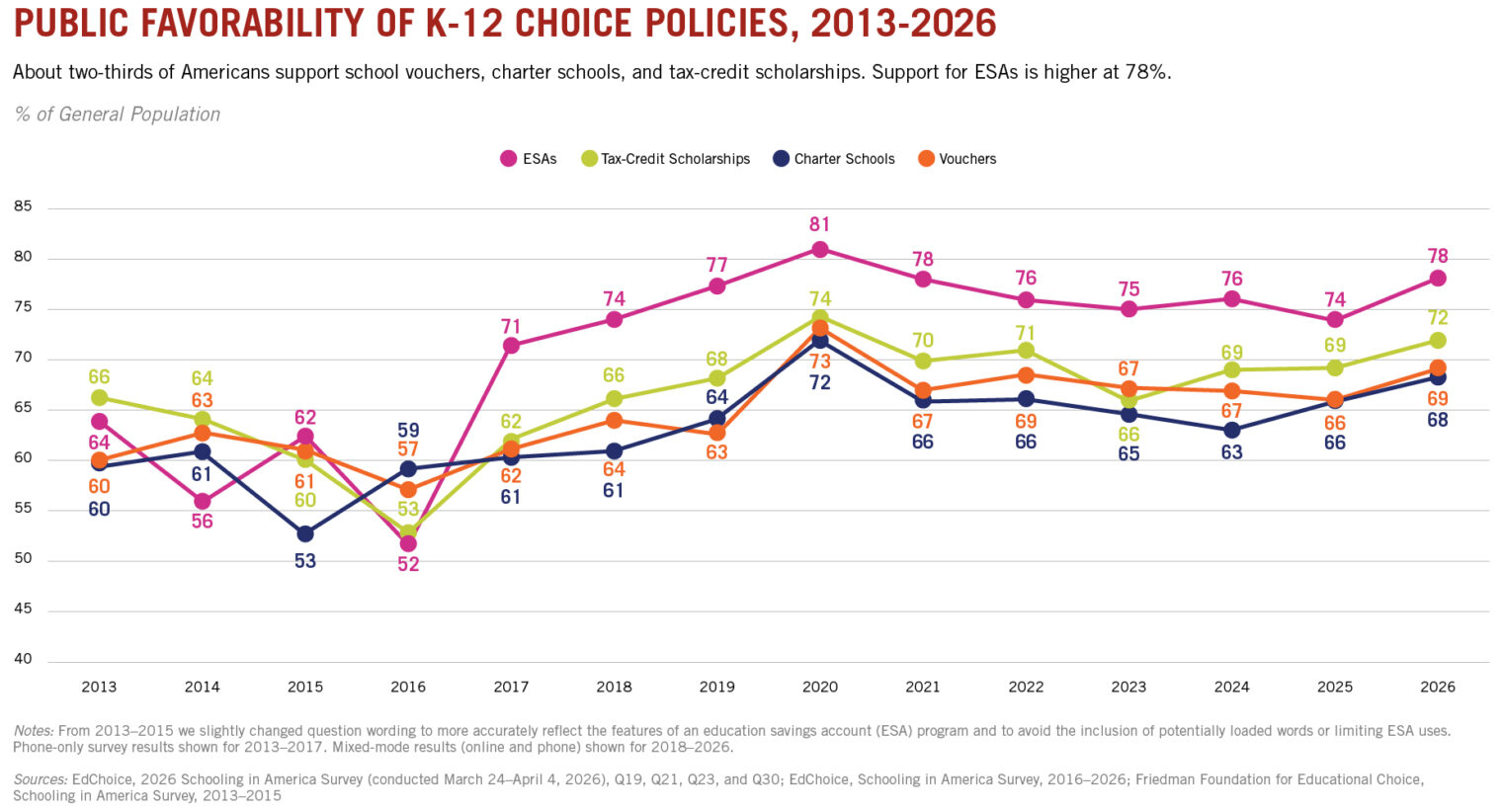
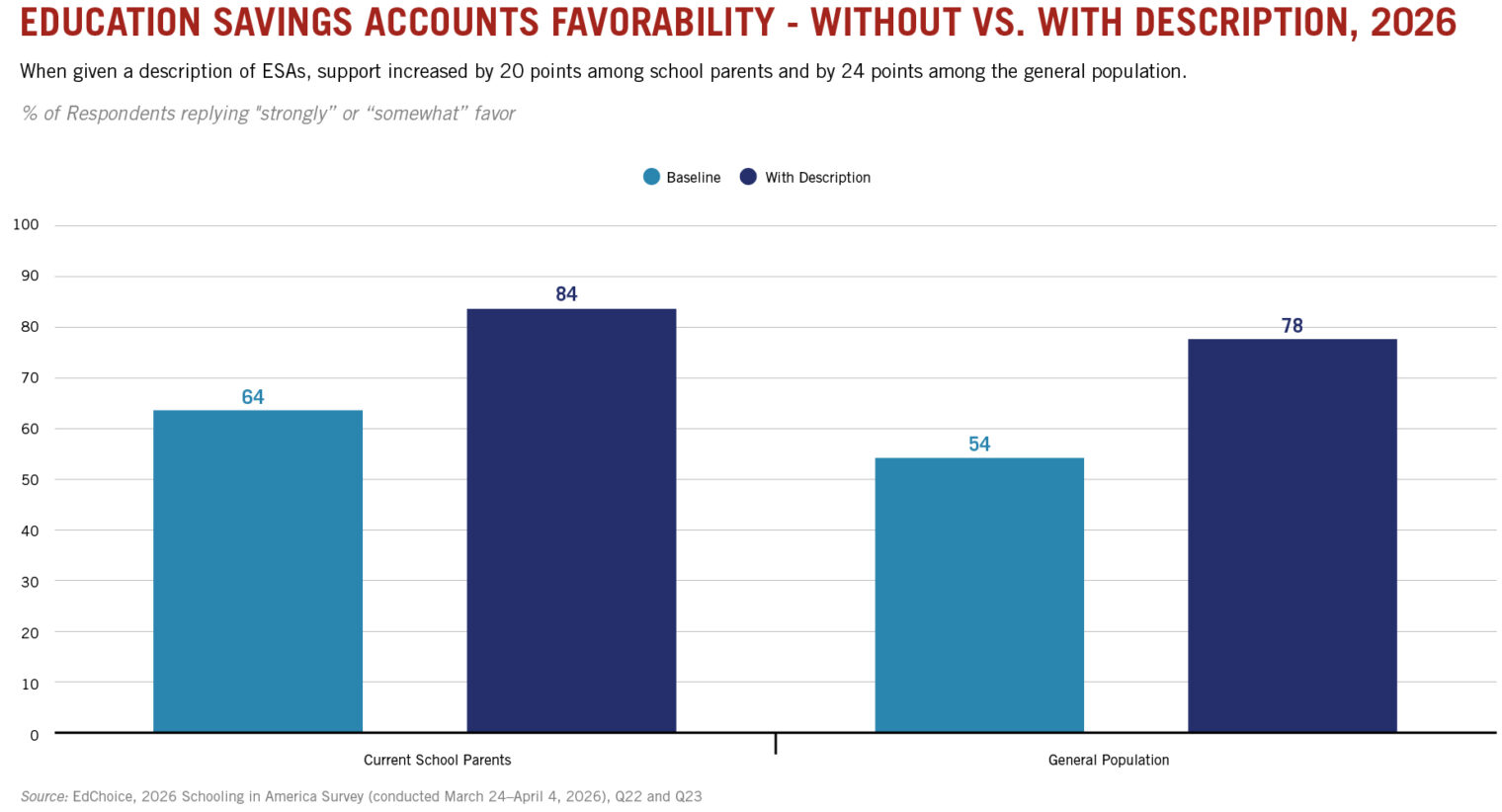
ESAs, though, remain the most popular school choice policy among the general public (78%), as well as school parents (84%). Even without a description of ESAs provided, over half of Americans (54%) and nearly two-thirds of school parents (64%) support the policy. With a description provided, however, support from the two groups increases by 24-points and 20-points, respectively.
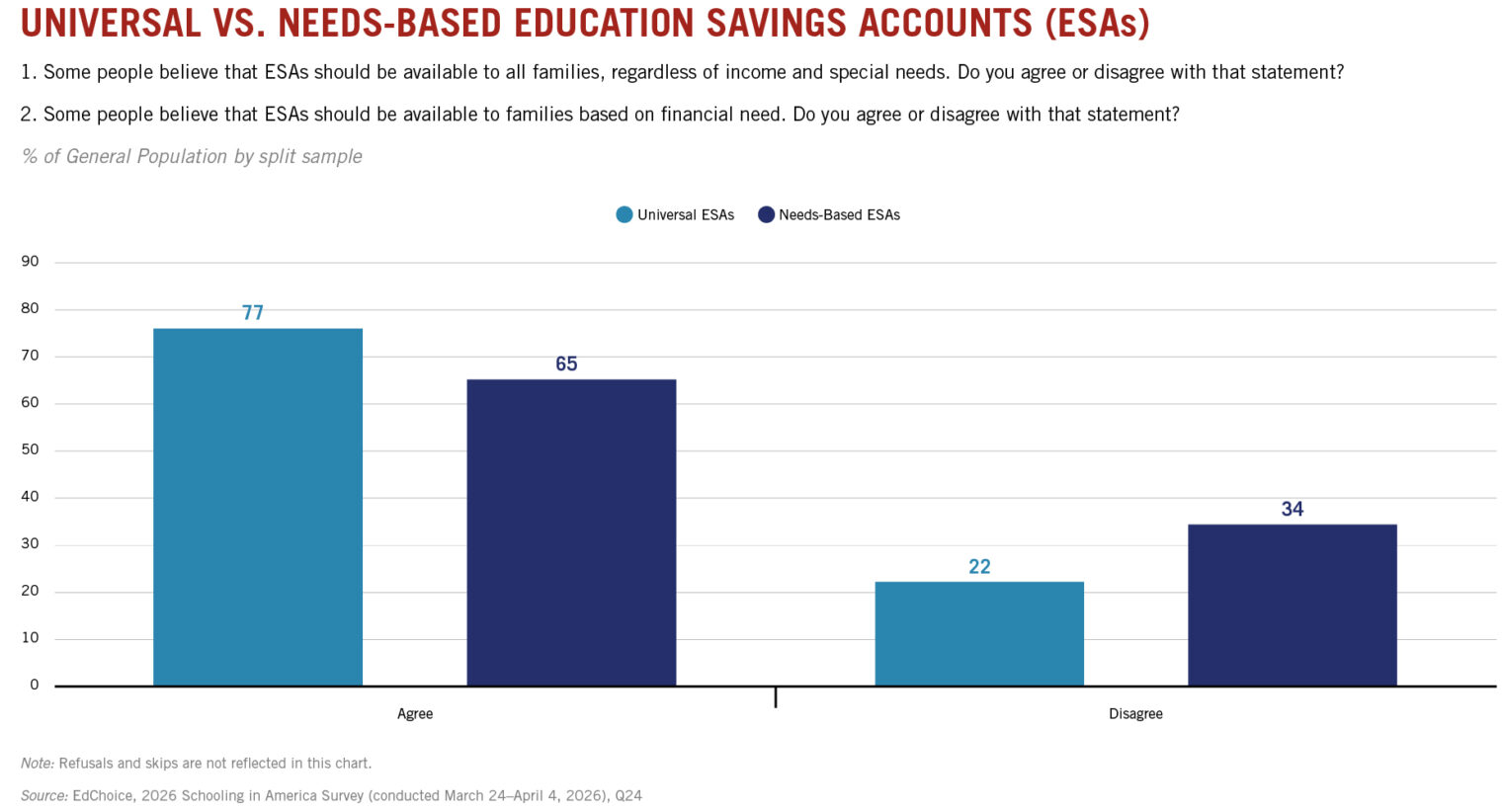
On the topic of ESAs, Americans are consistently more likely to prefer universal ESAs (ESAs that are available to all students) rather than needs-based ESAs (ESAs available only to students based on income level or special needs). More than three in four Americans (77%) support universal ESAs compared to roughly two-thirds (65%) of Americans who prefer needs-based ESAs.
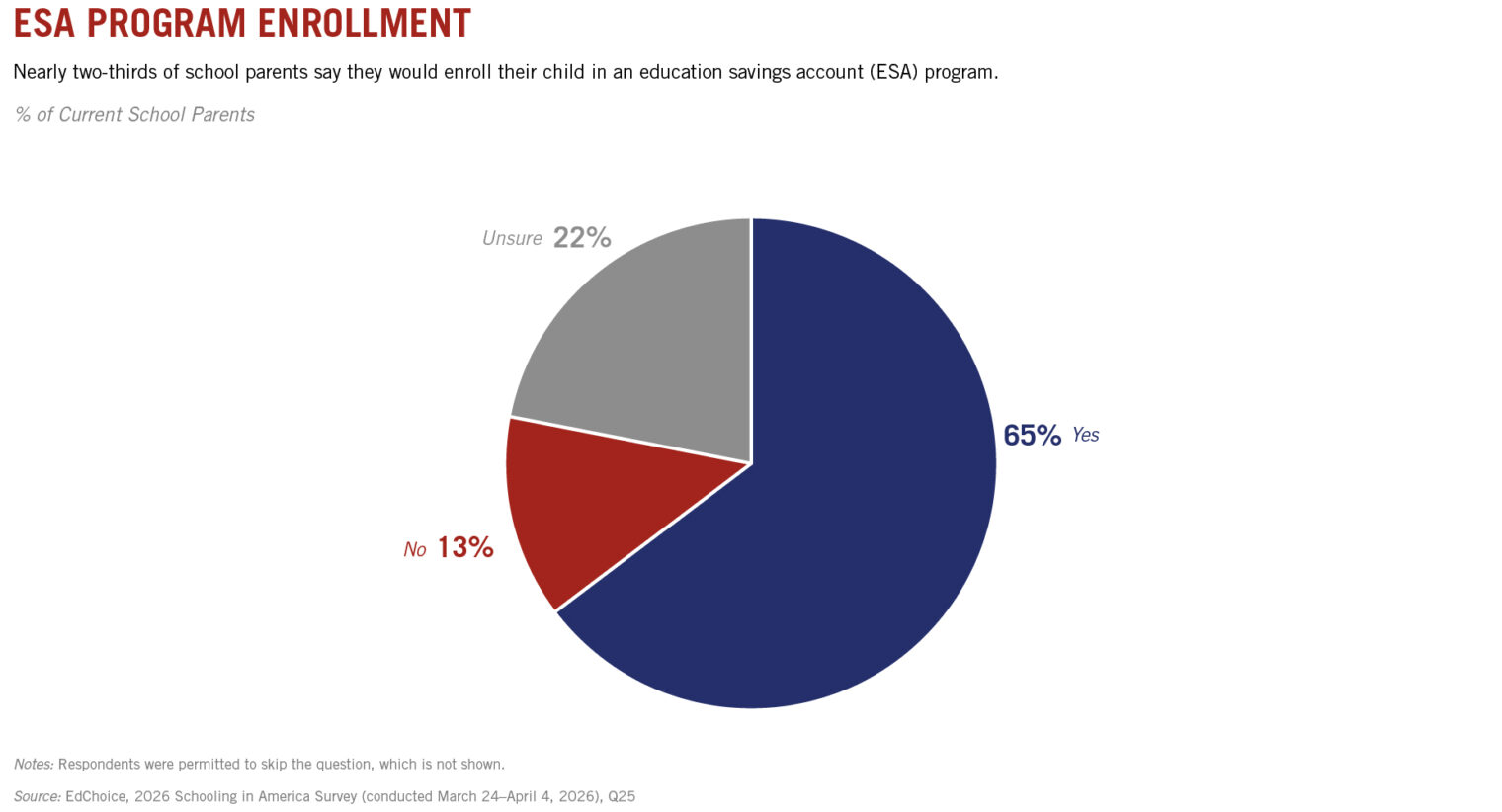
When asked if they would enroll their child in an ESA program, if given the option, 65% of school parents indicated they would do so, compared to only 13% that said no. A notable 22% of parents responded “unsure”.
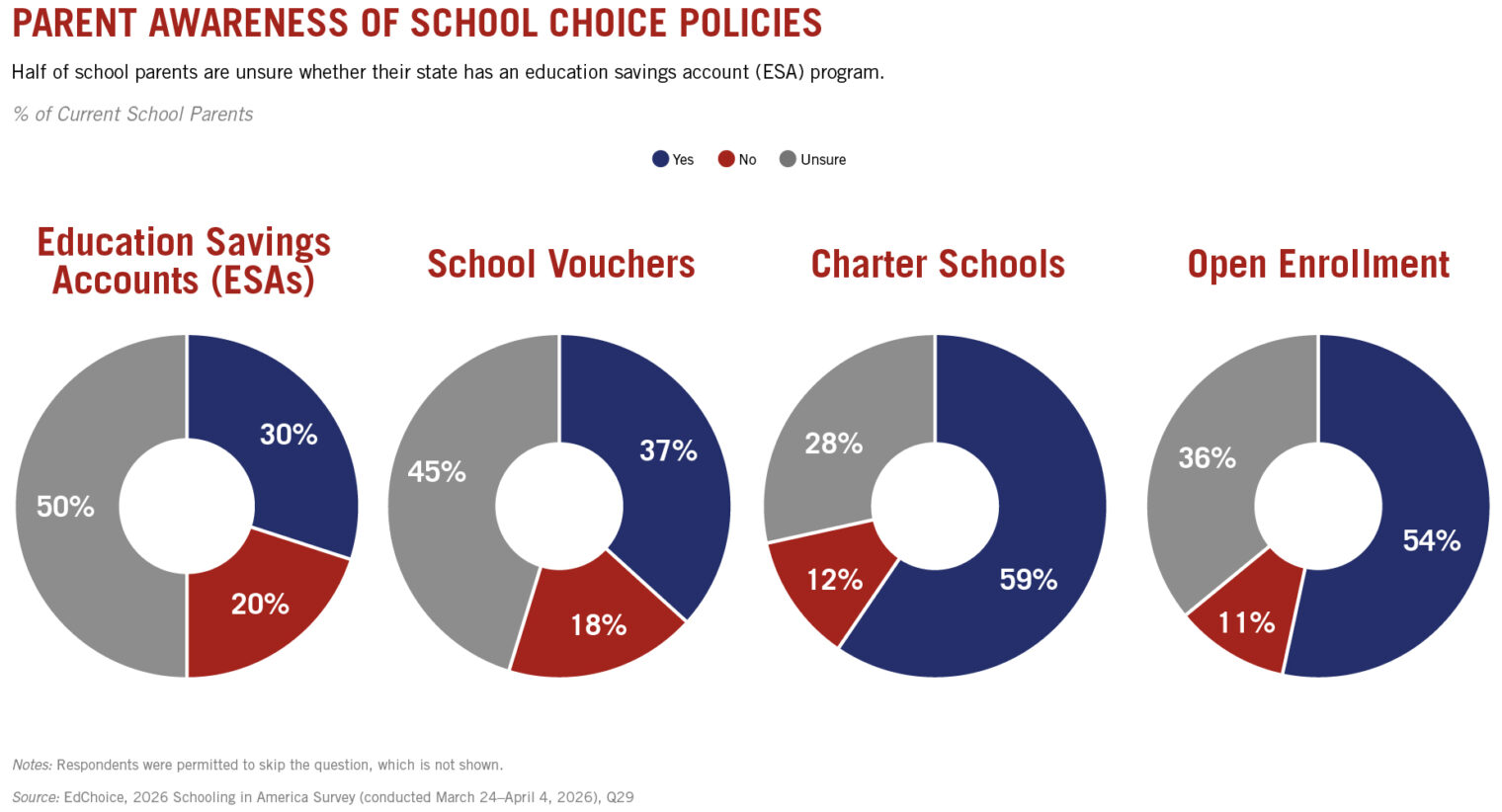
Awareness and ambiguity around ESAs continue to be a topic worth monitoring. While it’s true that ESAs are the fastest growing form of private school choice in America (18 states have an ESA program serving over 500,000 students across those states), 50% of parents said they are “unsure” whether their state has an ESA program. For comparison, parents were less likely to say they are unsure if their state has school choice policies such as charter schools (28%), open enrollment (36%), and school vouchers (45%).
Click here to delve into our interactive Schooling in America Polling Dashboard.
Latest from the Blog
-

Highlights from the LEGO State of the Classroom Engagement Report
LEGO Education has been around for over 45 years, working alongside schools, school districts, and educators to help students learn about a variety of subjects including robotics, science, computer science, and AI, just to name a few.
-
Former Arizona Gov. Doug Ducey Joins EdChoice Board of Directors
Former Arizona Gov. Doug Ducey is joining the organization's Board of Directors, bringing one of the nation's most accomplished school choice leaders to help guide its next chapter.
-
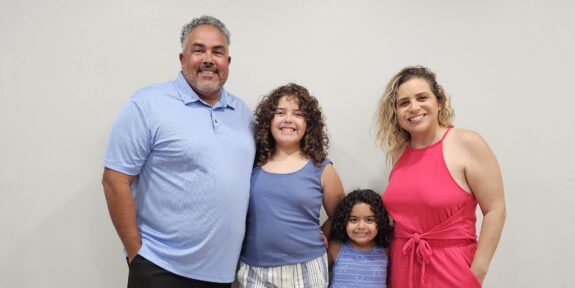
Meet Tatiana, a Florida Mom Fighting for Her Daughters’ ESAs
Tatiana teamed up with EdChoice Legal Advocates (EdLA) to defend Florida’s school choice programs against an attack by teachers’ unions and other opponents.