
What the Research Really Says About School Choice
School choice has gained tremendous momentum in recent years, with 19 states now offering programs that are universally available to all students. While we’re still waiting on enough data to evaluate many of these new programs, the broader body of school choice research stretches back more than three decades. During that time, around 200 empirical studies have evaluated the impacts of private educational choice programs on students, families, and communities.
To aid navigation of this literature, EdChoice has released a new edition of The 123s of School Choice every year since 2019. This publication reviews the available research on voucher programs, education savings accounts, and tax-credit scholarship programs in the United States and organized the research by eight distinct outcomes.

Parents, advocates, and skeptics alike recognize that test scores only tell so much about the impact of an education reform on children. With that in mind, The 123s of School Choice compiles research on:
- Program Participant Test Scores
- Program Participant Educational Attainment
- Parent Satisfaction
- Public School Students’ Academics
- Civic Values and Practices
- Racial/Ethnic Integration
- Fiscal Effects
- School Safety
While this is not an exhaustive list of factors worth considering, these are eight outcomes that have received extensive attention in the education policy research literature.
What does the research say? Of the 203 analyses that have been conducted, 83% found positive effects, 10% found no visible effects, and 7% found negative effects. Fiscal effects are the most studied outcome, and parent satisfaction and public school students’ academics have the most consistently positive results.
That said, this is not a meta-analysis. We are not taking effect sizes and boiling them down to an average effect. The goal of The 123s is to present the increasingly large body of private school choice research in a clear and easy-to-read format and cite the relevant studies so that anyone who is interested in the individual results can easily find them and read in more detail. But because synthesis studies are so important, we include those toward the end of The 123s as well. Spoiler: 23 of the 31 analyses find positive outcomes, and the remaining were neutral, mixed, or inconclusive. No research review has indicated an overall negative effect of private educational choice for any of our eight outcomes.
For those interested in reading or citing research on education choice, our Bibliography Page provides links and citations of empirical studies reviewed in The 123 of School Choice.
Whether you’re curious to study up on the effects of these programs yourself, need to bolster arguments for supporting choice in your state, or dispel myths about school choice programs, The 123s of School Choice is your go-to resource.
With that, we present to you the research on private school choice programs in America. As always, feel free to reach out with any questions or suggestions for improving this publication.
Latest from the Blog
-

EdChoice Urges Supreme Court to Review California Religious Freedom Case
This week, EdChoice Legal Advocates (EdLA) filed an amicus brief with the U.S. Supreme Court, expressing support for religious families seeking to use faith-based curricula in California’s independent study program.
-

New Survey: Back to School and Election Season
As a new school year begins and midterm elections approach, new EdChoice polling reveals what Americans and school parents think about the biggest issues facing K–12 education—and what they’re prioritizing in the year ahead.
-
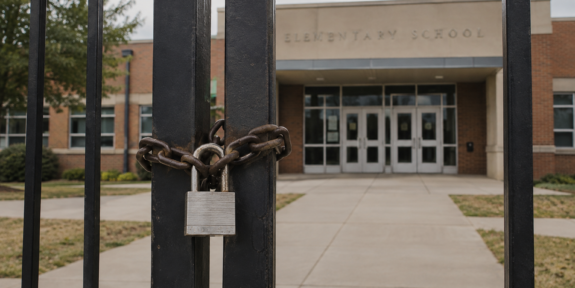
Does School Choice Cause Public Schools to Close?
Does school choice cause public schools to close? New research examining nearly three decades of data finds little evidence that it does—even in rural communities. Instead, closures are more closely tied to broader enrollment and demographic trends.